
What Fallingwater Gets Right About Sense of Place

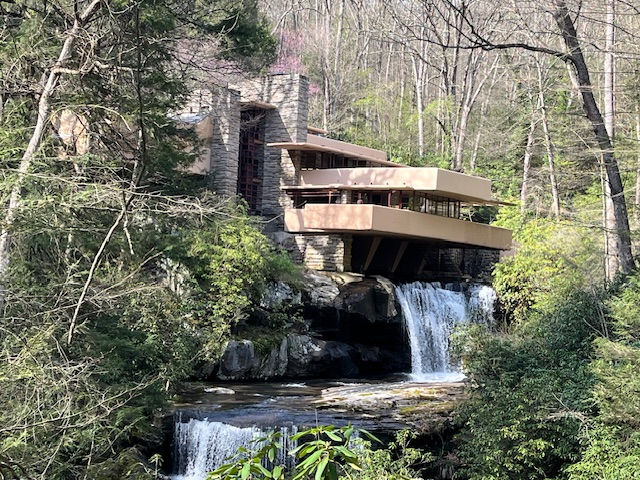
There are few places in the eastern United States that offer a sense of place quite as perfectly as Frank Lloyd Wright's Fallingwater. I was lucky enough to get a private tour of the iconic house this week along with my MATPRA colleagues during our quarterly meeting in the Laurel Highlands of Pennsylvania.
A Site That Shapes Its Own Future
As someone who works at the intersection of tourism and heritage, this visit was fascinating to me on several levels. As a UNESCO World Heritage Site, Fallingwater hosts around 140,000 visitors a year, many of them international travelers. This changes how the organization thinks about preserving not only the 90-year-old masterpiece, but also the 5,000 acres of natural landscape that surround it.
During a panel discussion with staff, I learned that they observed something unexpected during the pandemic shutdown. Without visitors, the house and the landscape seemed to relax. The site quite literally came back to life.
That experience led to a decision that many organizations would find difficult to make: they reduced the number of guests on house tours by about 23% in order to prioritize long-term preservation. Because Fallingwater is a ticketed experience, that choice came with real financial implications. But it was a tradeoff they were willing to make to protect the integrity of the place itself.
An Anchor for the Region
Fallingwater is one of the anchor attractions for the region’s DMO, Go Laurel Highlands, and the two organizations work together to position the Fallingwater experience as an entry point into the broader destination.
Wright designed Fallingwater to be fully integrated into the landscape. The Kauffmans told the architect they wanted to live by the waterfall. Instead, Wright carefully mapped the rocks, boulders, and trees on the site and designed the house to sit within it -- directly over the falls.
That connection to nature becomes a natural bridge to everything else the Laurel Highlands has to offer: outdoor recreation, hiking, water, and a deeper sense of immersion in the environment. The result is that a visitor who comes for a single, iconic site is introduced to a much larger story about place.
Experiencing a Place, Not Just Visiting It

What struck me most during the tour, though, was how intentionally that sense of place is built into the visitor experience.
Our guide walked us down toward the house and then simply let us stand there for a moment to take it all in. Listening to Bear Run as is rushes down the stone cliff and into the home's plunge pool. The leaves rustling in the forest canopy above.
He later explained that his goal was to see Fallingwater through our eyes. To achieve that, his tour wasn’t overly scripted. We were encouraged to ask questions, to notice things, to react. He pointed out elements we might have missed, sharing context when it mattered, but the experience felt led by curiosity rather than by a fixed narrative.
And the setting does a lot of the work for you. Even inside the home, the mid-century modern fixtures and the touches Wright added to bring the outdoors in...It creates a sense of calm that’s hard to describe but very easy to feel.

After the house tour, visitors can take a path to the iconic view of the house and pause on a bench to take it all in. It’s simple, but it’s intentional. It gives visitors space not just to see the site, but to experience it.
Extending the Experience
One of the most interesting things I learned during the visit is how Fallingwater is working with two other nearby Frank Lloyd Wright sites -- Kentuck Knob and Polymath Park -- to extend the visitor experience beyond a single stop.
Fallingwater naturally gets the majority of the attention. For many visitors, it’s the primary reason for coming to the Laurel Highlands in the first place. But instead of treating that as a standalone experience, the three sites have found a simple way to work together.
They’ve created a shared microsite -- Wright in the Laurel Highlands -- that introduces Frank Lloyd Wright’s work in the region and provides an easy way for visitors to visit all three locations. It doesn’t replace their individual websites or branding; it simply adds a layer that connects them.
From a visitor’s perspective, it makes perfect sense. If you’re interested in Fallingwater, there’s a good chance you’d also want to see the other Wright homes nearby. The microsite makes that next step obvious and is an easy model for other museums to borrow.
Historic sites, museums, and cultural organizations often sit within close proximity to one another, each telling part of a larger story. But without a clear way to connect them, those opportunities are easy for visitors to miss. This kind of collaboration drives visitation from one site to another, while creating a more meaningful experience overall.
Instead of a single stop, visitors are given a path. And that shift from individual sites to connected experiences is where a lot of untapped potential still exists.
I’ve been thinking a lot about what it takes to create that kind of continuity across a destination, and how it can be done more intentionally.
More on that soon!


